Daggerheart - A World that Pushes Back
Overview
Last month we introduced Daggerheart and explored what makes it such a strong game for cooperative worldbuilding: the Duality Dice, the back-and-forth conversation between GM and players, and the idea that everyone at the table helps shape the story.
This month we're playing The Marauders of Windfall, the follow-up adventure to The Sablewood Messengers. The party has leveled up, the world has gotten bigger, and the stakes are about to get much higher. In this adventure we learn to deal with choices that don't have clean answers and consequences that follow you when the session ends.
This is where Daggerheart starts showing how it succeeds as a game where the moral landscape is just as interesting as the combat, and where what you decide today shapes what tomorrow looks like.
NPCs That Feel Like People
The first adventure introduced colorful townsfolk and opportunistic bandits. The Marauders of Windfall gives you something harder to navigate: NPCs with their own goals, fears, and reasons that make sense from where they're standing. Daggerheart builds this into how GMs are asked to weave together a world. Every important NPC gets motives that explain their behavior even when the players do something unexpected.
The core rulebook gives GMs tools to make this mechanical as well as narrative. Important NPCs can be given triggers and effects that reflect how they move through the world. An ally who steps in front of a hit when a party member is in danger. A mentor who gives advantage on the next roll after a failure. A companion who, if you're not careful, might disappear in the night with some of your gold. These features make the NPCs feel like active participants rather than set dressing.
The game encourages you to lean heavily on the backgrounds and origins of the players to build the motivations for the NPCs. This will allow the players to see themselves reflected in the world as they play. When NPCs matter, they should act like they matter and Daggerheart gives you the tools to make that happen.
Social Encounters Have Weight
Some of the most meaningful experiences in TTRPGs are scenes built around conversation, information gathering, and navigating a room where players are digging into the lore, character backgrounds, and motivations of the world around them. There are no swords drawn (usually), but the stakes are just as real as any fight.
Daggerheart handles social scenes the same way it handles everything else: through the Duality Dice. A Presence roll to charm the leader. An Instinct roll to read what an advisor isn't saying. A Knowledge roll to figure out whether an arcane or technical explanation holds together. Every roll can land with Hope or Fear, and the GM has moves available either way.
This is what separates a social scene in Daggerheart from a skill check in D&D. It's not just pass/fail. A success with Fear means you got the information you wanted, but the NPCs you engaged with adapt accordingly to the situation. A failure with Hope means the conversation didn't go your way, but you walked away with useful insight, or a lucky break anyway. The scene moves forward regardless, and it moves forward in a direction shaped by what happened. When the spotlight moves back to the players, they now continue the scene with new information and consequences tailored to their characters and actions.
This is also a great tool to teach players that not every problem ends in a fight, and that sometimes the most important thing you learn in a session comes from a conversation over a meal, not a combat roll. Countdowns and an Independent World This is also a time to lean into one of the tools not used very much in many TTRPGs - The Countdown. A die on the table, a circle broken into pie slices, or a series of boxes on a piece of paper. The Countdown is something that represents something happening in the background whether the players act or not. The invasion force gathering at the border. The rival faction quietly expanding. The damaged ward slowly failing.
Sometimes the countdown is made known to the players, and sometimes it isn't. It depends on the situation and the player interactions with the NPCs and the world. I personally find that the players should start with no knowledge until the first tick of the countdown, where they begin to learn something is happening, and they probably need to figure out what that is quickly. Short countdowns create immediate urgency in a single scene. Long-term countdowns can stretch across an entire campaign, ticking down during rests and downtime, leaving breadcrumbs in the world for players to notice before the thing they ignored finally arrives at their doorstep. The rule book describes it well: by the time players see the banner of a rival leader hung on the castle wall, they should already know what that means.... because they had chances to stop it.
This is how you make a world that feels like it's moving on its own, rather than waiting for the party to arrive. Choices That Outlast the Session This next part in our series on Learning to Play Daggerheart leans heavily on consequences that shape the future of the story.
While The Sablewood Messengers teaches players and GM how to play Daggerheart and sets them on a mission, this next portion will teach the everyone how to handle a narrative driven by the actions and choices of the players. It leans into asking the players to discuss complex topics of morality, obligation, and what to do about their goals.
Collectible Pin
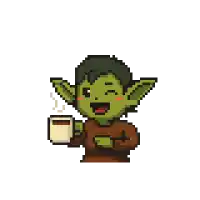
1 x Limited Series 1 Coffee Goblin Pin for Attendees that Purchase a Drink.
Buy any drink during the event and receive a free Limited Series 1 Pin featuring our smiling Coffee Goblin mascot — yours to wear proudly as a first edition adventurer of Espressos & Epics. Supplies are limited, so sip early!
Member discussion