August 16 - Espresso and Epics - Sailing the Astral Sea
Join us at our Espresso and Epics Event on Sunday, August 16th at Meanwhile Coffee in Herndon to learn Aetherdark with our Oneshot Game. You can also join us Wednesday August the 12th at the Reston Community Center!
Sign up on our discord and say hi!
Reston Plays Games - 6PM, Wednesday, August 12th AND August 19th at the Reston Community Center
Espresso and Epics - 1PM, Sunday, August 16th at Meanwhile Coffee
You can also sign up for each event on the:
And
Aethelwulf Games Discord
Yes - it is reversed this month!

Every month we've been pairing a game with the idea it does best - Draw Steel and learning to run games, Shadowdark and where this hobby actually came from, Fabula Ultima and how JRPGs and Japanese influences have impacted modern TTRPGs, three straight months getting our hands deep into Daggerheart.
This month we're stepping off solid ground entirely.
August's feature is Aetherdark, a rules expansion that brings flying ships into Shadowdark and sends your party sailing through something it calls the Astral Sea. I got a chance to go over Aetherdark with Micah Abresch, the designer, and his answers to my questions reshaped a few things I thought I already understood. So rather than just reviewing the book, I want to use it as a lens for a bigger question: what actually makes space-fantasy TTRPGs tick, mechanically and thematically, and what is it about this concept that keeps it reappearing in many systems?
The Crew
Before getting into mechanics, I asked Micah the plainest question I could think of: forget the rules for a second, what's the actual feeling Aetherdark is chasing at the table? His answer had two halves, and both of them ended up reshaping the rest of this article.
First half: The party is part of a crew, and the crew is the thing built to last. Every ship in the book needs a crew to run it - there's no lone wizard sitting at a magical helm flying solo. Micah pointed out something I hadn't considered... because the crew carries the mission forward even when a PC doesn't, character death stops being the campaign-ending event it can be in a lot of ongoing Shadowdark games. The story - and the crew - survive the heroes. That's a genuinely different promise than most fantasy campaigns make.
Second half: Scope with teeth. You can fly anywhere... but you'll want to remember the aether itself is dangerous, and your ship can be threatened no matter where you point it. So the feeling isn't "the map is huge, go wherever." It's "the map is huge, and every inch of it could consume you."

We Enjoy The Freedom Ships Bring
Wooden ships sailing between the stars is a theme that goes back decades, and it resurfaces every few years because something about the dream just works. Cannons and rigging against an endless black. Age-of-sail swagger dropped into a setting with no coastline at all.
What's interesting about Aetherdark specifically is that Micah is upfront that this genre's most famous predecessor was an inspiration, not the template. He's described deliberately steering away from that predecessor's specific setting and cosmology - different lore, different ancestries, different physics for how a ship even gets off the ground. Aetherdark ships are powered and steered entirely by their crews hauling on crystal-rigged sails, tending arcane jets, or literally singing in rhythm to keep an incantation-ship moving. It's less "the same game with new set dressing" and more its own answer to a familiar question: what happens when you cross the age of sail with the vastness of space?
That answer is built from a handful of genuinely distinct ideas.
Missions and Jobs - With Room for a Villain
Traditional fantasy campaigns tend to build toward a villain to topple, a prophecy to fulfill, a world-ending stake to avert. I thought Aetherdark swapped that out entirely for something purely episodic. I believed we would be dealing with contracts, bounties, cargo runs... and no fixed endpoint. Micah corrected that assumption in a useful way: leaning on GM tools instead of a rigid plot doesn't mean there's no room for a big bad at all.
The Syndicate, Aetherdark's introductory campaign material, actually includes a full run of encounters that escalates all the way to a final confrontation - the difference is that it's handed to the GM as a collection that can be used in any order, at any pace. A given threat can stay a minor, recurring nuisance for an entire campaign, or it can grow into the big bad, or it can start as one and become the other depending on what the table does with it.
This means the villain's shape is emergent rather than pre-loaded. Micah told me that in his own games, players tend to develop their own goals once they're given room to. He pointed to one recurring pattern: whenever a group visits a strange, politically tangled locale, they immediately want to get involved. Explore. Take sides. Dig in. Arriving as an outsider in something genuinely foreign is its own spark.

Making the Void Interesting
Here's a real design problem at the heart of every space-fantasy game: space is supposed to be empty. That's the whole point of it. But an empty hex crawl is a boring hex crawl, and "you fly for three days and see nothing" is not a sentence anyone wants to sit through twice.
Micah has talked about being frustrated by how most attempts at this genre handle it - random encounter tables that boil down to a handful of asteroid fields and a rotating cast of hostile aliens, over and over, with nothing underneath to make the emptiness itself feel like a place. Aetherdark's answer is to treat the void the way a good GM treats a forest: with terrain. Clear Aether gets its own d20 table of phenomena — dead patches where the aether goes still, novas rolling outward in slow silver waves, stars so densely packed they grind against each other — and Nebulae get an entirely separate table of their own. Roll high enough and you're told to combine results, so density becomes something that emerges from the table rather than something bolted onto every roll by default. What situates a party in this new reality fastest, Micah said, is often just whatever strange threat they meet first. A wave of tumbling, cold crystal shards rolling toward the ship does a lot to establish "you are somewhere else now".
One thing I wound up rethinking: I believed the ship's provisions created the same kind of grinding resource pressure Shadowdark applies to dungeon torches. That's only half true. Ship supplies do matter and do restrict how far you can push a long voyage between worlds, but once you're planetside, Aetherdark actually loosens the pressure rather than tightening it, since hex travel there can simply be flown over. Micah was clear that the real tension in his games has always stayed exactly where Shadowdark already puts it: the timed torch, in the dungeon, where your aethership can't follow you in.
A Crew You Care About - With Less Bookkeeping
Fantasy games usually treat hired hands as an afterthought which amounts to nothing more than a name on a payroll line - gone the moment the plot needs them gone. In Aetherdark your crew levels up alongside you, gains its own stat block, picks up specialists like a Bosun or a Chirurgeon, and can be broken by grief or panic just like any other creature at the table.
But this isn't thirty individually-statted NPCs riding along with your party. Individual crewmembers get a name, an ancestry, and a background, and nothing more mechanically than that. Crew Events, the mechanic that plays this out, run about 30–45 minutes during a session while the main party is off in a dungeon. The players briefly step into the crew's shoes and improvise a small scene back at the ship. It leverages how Shadowdark is so forgiving about level gaps between characters. A player who gets attached to a particular crewmember can simply switch to playing them later.
Micah shared a story from his own table that's a perfect illustration of how fast that attachment forms: a crewmember lost a foot in a battle, and rather than shrug it off as background noise, the players spent real effort finding a way to get that NPC a magical replacement. Nobody wrote that beat into an adventure, but the party just decided it mattered.
That resilience turns out to be doing more design work than it looks like at a glance. Aetherdark wasn't originally planned to have the crew to soften the blow of character death this much, but because the party's mission belongs to the crew rather than any single hero, losing a PC in an ongoing Aetherdark campaign doesn't derail the story the way it easily can in a normal Shadowdark game. The crew carries what the individual can't.
Making the Fight Bigger Than the Party
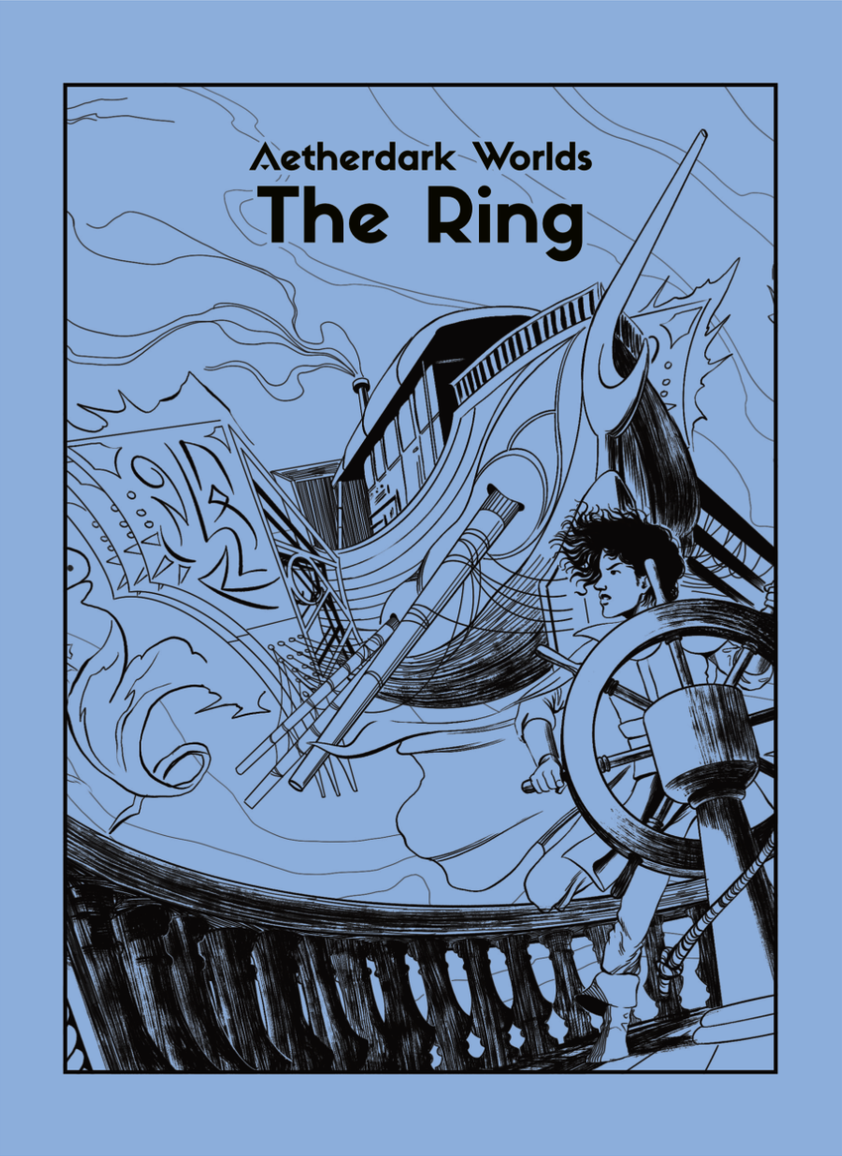
Naval and boarding combat replaces melee-scale tactics with something closer to fleet strategy - ramming, siege batteries, pursuit, boarding actions. And crucially, when things escalate to crew-versus-crew combat, Micah's been clear that he didn't want this sliding into a full wargame. During a boarding action, your crew fights the enemy crew as its own resolved exchange, while your actual player characters square off against the named threats the captain, the leviathan's tentacles, whatever the "key" enemies are in that fight. The mass-combat layer runs in the background, but the spotlight stays on the table.
This is the through line that keeps space-fantasy feeling like fantasy even when the scale gets ginormous... which brings us to the monsters.
Monsters Larger Than Your Setting
Once you're sailing between stars, the old dungeon-monster math stops applying cleanly. Aetherdark's astral krakens scale from a "young" specimen roughly the size of a corvette up to an ancient variant with a hull-devouring bite and tentacles that can outright drag a ship off course. These aren't bigger versions of a dungeon monster so much as environmental hazards with teeth - the storm you're flying through might be the fight.
When asked what he was going for with a monster built to threaten the whole ship and crew - rather than just the party, I was half-expecting some deep lore answer. His actual response was refreshingly honest: the kraken looked cool, and it instantly signals magical-pirate-adventure. Everybody already knows what a kraken is, but he also pushed back gently on the idea that bigger monsters should make the crew the whole story. Even with a ship and a crew backing them up, Aetherdark is still built so the biggest threats stay bigger than any of it — this is still high fantasy, and the hero with the magic sword is still supposed to be the one who ends up facing the dragon.
Ghosts in the Vastness
One last thread worth pulling: Aetherdark's Echoes are wrecked ships and dead crews rebuilt out of aether itself - silvery, half-real, and still going through the motions of a life that ended. They're a great example of why the found-derelict-in-the-void trope works as well as it does. A haunted shipwreck in an ocean at least has a shoreline nearby, other ships that might have seen the wreck, some sense of a world going on around it. Out here, a wreck is alone in a way nothing on solid ground ever quite manages, and that isolation does a lot of the horror's heavy lifting long before any dice get rolled, or a description gets read.

Why This Genre Is Worth Experiencing
Space-fantasy is really asking your table to try a different shape of campaign: built around a crew that outlasts any one hero, terrain-rich instead of empty, with room for a villain to grow into the story rather than being handed one from page one.
At the end of it all, there is one thing the author hopes a group remembers most after their very first Aetherdark session: he hopes they remember that the crew matters. That they're part of something bigger that needs protecting, and that the crew protects them right back.
If you've been trying to find a way to shake up your current campaign, adding thirty crew members in a magical vessel might be exactly what your group needs.
Come sail the Astral Sea with us this month and find out.
Collectible Pin
If you are local, or in the area, come roll some dice with us and get this guy!
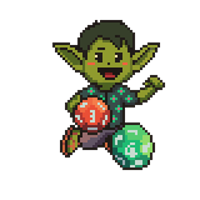
1 x Limited Series 2 Gaming Goblin Pin for Attendees that purchase a drink.
Buy any drink during the event and receive a free Limited Series 2 Pin featuring our smiling Goblin mascot - yours to wear proudly as an adventurer of Espressos & Epics.
Member discussion